
Montgomery County Arrest Records and Charges
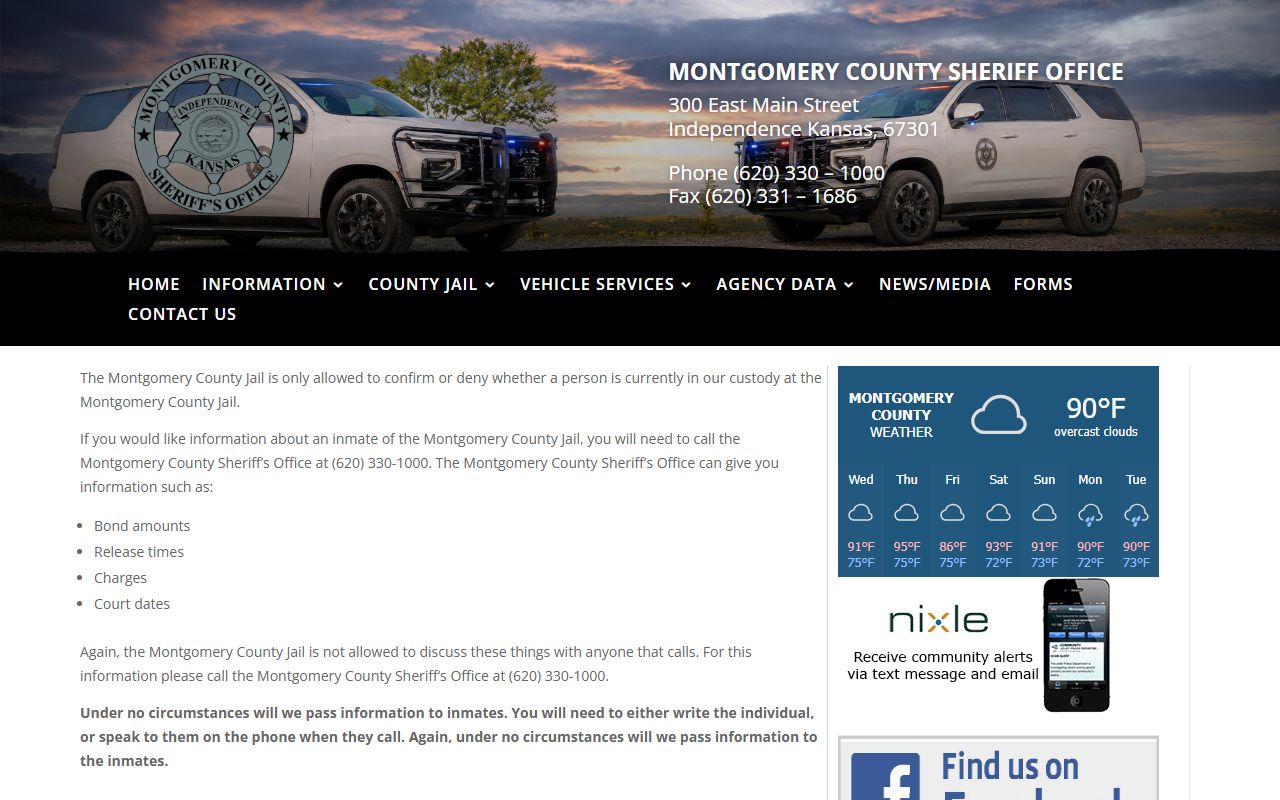
Arrest records in Montgomery County begin on the law-enforcement and jail side. A public roster entry may show the person's name, booking number, booking date and time, arresting agency, bond, demographics, and charge text with statute or code strings. That data can be useful, but it is not a promise that a final court charge or conviction exists. The jail information channel also says details beyond simple custody confirmation should be directed to the Sheriff's Office, and charges filed against an inmate are available from the arresting authority.
Court charges after arrest begin when the prosecutor files a charging document in District Court. The Montgomery County Attorney reviews state-law criminal matters and files charges in the District Court when the case proceeds there. Once filed, the charge becomes part of the court record held by the Clerk of the District Court. The full case file, including pleas, disposition, sentencing, and probation terms, is treated separately from the booking record. For full case outcomes, use the Montgomery County criminal court records page.
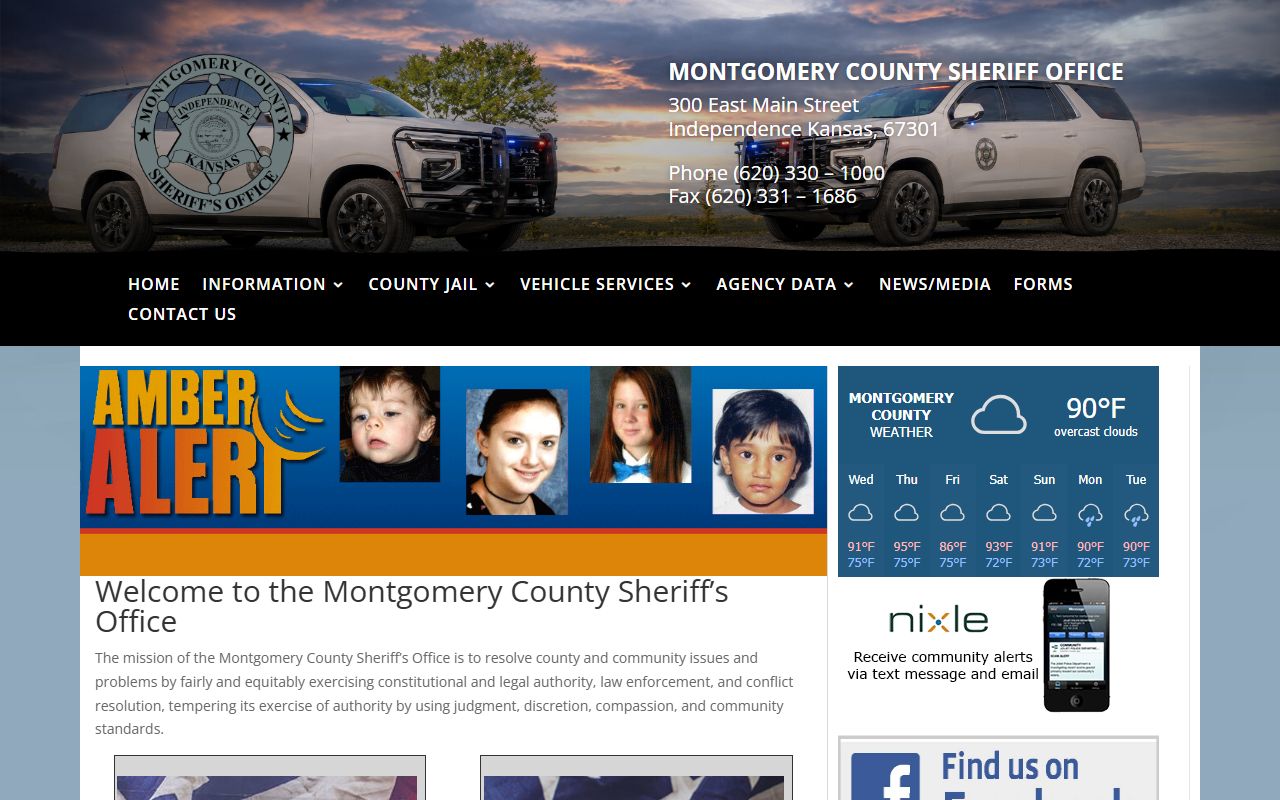
The official Montgomery County Sheriff's Office site is the source for jail and sheriff channels tied to arrest records.
Montgomery County Booking vs Filed Charges
The jail roster can show a charge label quickly after booking. That label may come from the arresting agency, a warrant, a citation, a probation matter, or a law-enforcement booking decision. Filed court charges are different. They reflect what the County Attorney presents to District Court in a complaint or information and what the Clerk of the District Court tracks in the case file. One arrest can lead to several charges. It can also lead to a reduced charge, an amended charge, a dismissed charge, or no filed case found in the court search.
Montgomery County's public jail roster is searched by name or booking number. The roster results observed in the research showed charge descriptions, statute strings, bond, arresting agency, booking date/time, age, sex, race, and booking number. Public examples included Montgomery County, Independence PD, and Coffeyville PD as arresting agencies. They also included failure to appear, contempt of court, probation violation, criminal threat, driving while suspended or revoked, and county warrant notes. Some entries show bond as 0, which should not be read as release eligibility without calling the Sheriff's Office.
- Name
- Displayed as last name and first name for the person currently listed in custody.
- Booking number
- Booking identifier, with examples like B26000000174 in the observed roster.
- Charges
- Charge text and statute or code strings, sometimes with multiple charges separated in one entry.
- Bond and agency
- Numeric bond field and arresting agency, both of which should be verified before use.
- Date and demographics
- Booking or arrest date and time, plus age, sex, and race as displayed on the roster.
The jail inmate information page directs detail questions to the Sheriff's Office and arresting authority.
Find Montgomery County Arrest Records
Use more than one channel when matching arrest records to court charges after arrest. Start with the jail roster for current custody only. Then use Kansas CaseSearch for the District Court case. If the filing is not public online or if a document is needed, send a written request to the Clerk of the District Court. For city ordinance or municipal traffic matters, contact Independence, Coffeyville, or Caney Municipal Court instead of assuming a District Court case exists.
- Check the Montgomery County jail roster by name or booking number for current custody and booking charge information.
- Record the arresting agency, booking date, charge text, bond field, and booking number shown in the roster.
- Search Kansas CaseSearch by defendant name or case number for filed District Court charges.
- Compare the charge list, case status, disposition, and docket entries with the booking data.
- Request documents from the Clerk of the District Court when the filed complaint, information, journal entry, or sentencing order is not online.
For court documents, the 14th Judicial District public-records form asks for date, requester name, address, city, state and ZIP, email or phone, description of request, and signature. The description should identify the case number if known, the defendant name, the document requested, and a date range. The District Court has offices in Independence and Coffeyville, with the Independence office at 300 E. Main Street, Suite 201 and the Coffeyville office at 102 W. 7th Street, 3rd Floor.
Montgomery County Charges After Arrest
Charges after arrest are filed through a charging document. Kansas criminal court files commonly use a complaint or information. A complaint is an initial charging paper. An information is a formal charging document often used for felony prosecutions. Indictments are grand-jury charges and are not the usual local path in the research, but the term can appear in criminal law. In Montgomery County, the key local office is the County Attorney, who files and prosecutes state-law criminal charges in District Court.
| Document | Filed By | Common Use | What It Starts |
|---|---|---|---|
| Complaint | Prosecutor or law-enforcement-supported filing | Initial criminal charge document | Criminal case or first court charge record |
| Information | Prosecutor | Many felony prosecutions and formal charges | Formal prosecution in District Court |
| Indictment | Grand jury | Less common path for serious charges | Criminal prosecution based on grand-jury action |
A charging document should be read with the docket. The docket shows whether charges were amended, whether new counts were added, whether a plea was entered, and whether a count was dismissed. A single arrest can produce several filed counts, and each count can have its own status. That is why the charge list alone is not the same as the final court result.
Montgomery County Charge Status Terms
Charge status changes as a case moves. A pending charge means the court has not reached a final outcome for that count. An amended or reduced charge means the prosecutor or court record now tracks a changed count. A dismissed charge means the count did not proceed to conviction. Some courts use terms such as nolle prosequi to show the prosecutor is not pursuing a count, though local label wording can vary by system.
| Status | What It Means |
|---|---|
| Pending | The filed charge is still open or awaiting final action in the court case. |
| Amended | The original charge was changed, often by charge text, level, count, or statute reference. |
| Reduced | The charge was changed to a lesser count or lower severity level. |
| Dismissed | The count was ended without a conviction on that charge. |
| Nolle prosequi | A prosecutor's decision not to proceed on a charge when that term is used in the record. |
| Disposed | The court has entered an outcome, such as plea, verdict, dismissal, or other final action. |
Bond and warrant entries can complicate the status picture. A failure-to-appear charge or bench warrant may be tied to missing court, contempt, probation violation, or unpaid obligations. Those entries should be verified with the court or Sheriff's Office before any decision is made based on a public roster line.
Montgomery County Charge vs Conviction
Arrest records and court charge records are often misunderstood because they use legal terms before a case is final. Being arrested is not proof that the person committed the offense. Being charged is not the same as being convicted. A conviction requires a guilty plea, verdict, or other court finding that establishes guilt. A record can show both non-conviction charges and conviction counts from the same case.
| Point | Charge | Conviction |
|---|---|---|
| Timing | Appears after arrest review or court filing. | Appears after plea, verdict, or final court finding. |
| Meaning | An accusation or count filed in court. | A finding or plea that establishes guilt. |
| Possible result | Can be pending, amended, reduced, dropped, or dismissed. | Can lead to sentence, probation, fines, costs, or restitution. |
| How to verify | Check the filed complaint, information, and docket. | Check the disposition and sentencing journal entry. |
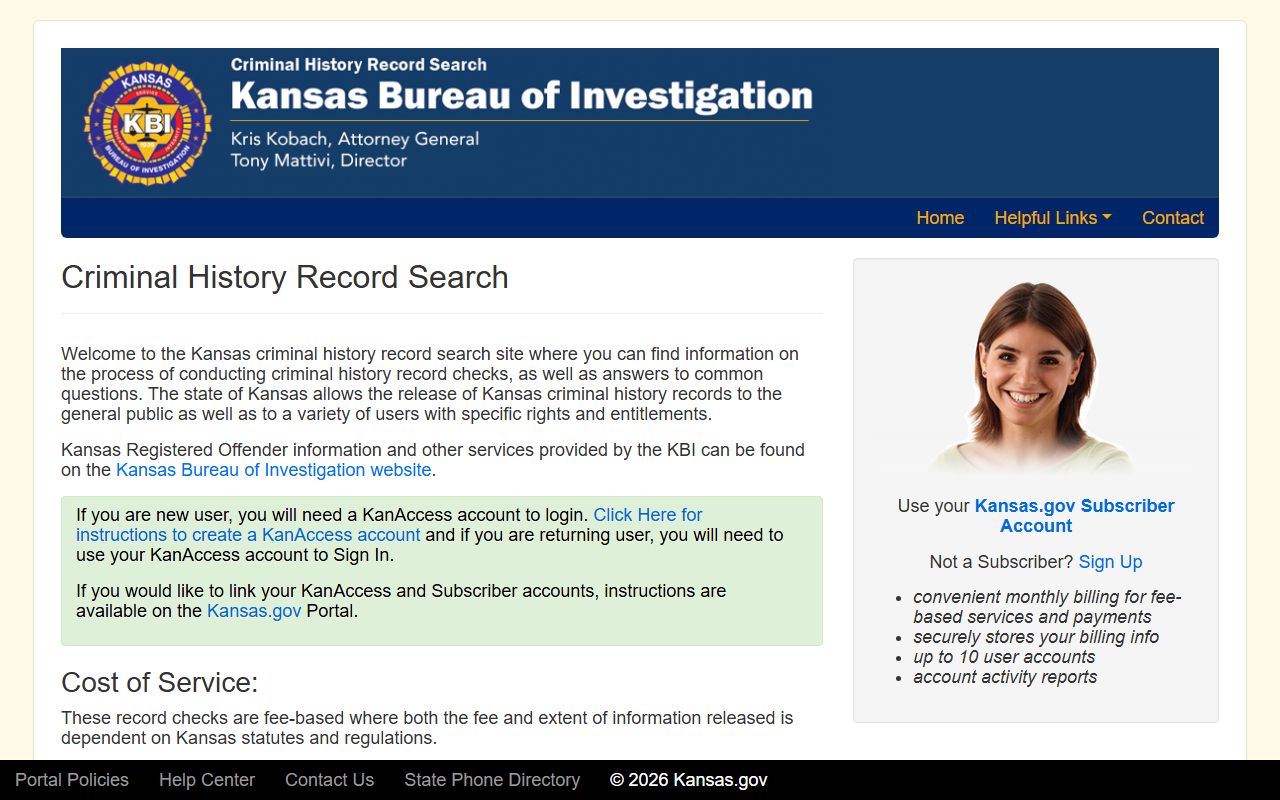
KBI history may summarize statewide criminal-history information, but the District Court record remains the source for the local filed charge and court outcome. The Kansas criminal history record check is a separate fee-based name search. It should not be used as a replacement for court documents when the exact filed charge, plea, or sentencing order matters.
The official KBI criminal history page explains the separate statewide record-check channel.
Montgomery County Sealed and Expunged Charges
Sealed records are closed from ordinary public access by statute, court rule, or order. Expunged records are restricted through a separate court process. Kansas expungement law covers certain convictions, arrest records, and diversions, but eligibility depends on the offense, waiting period, later conduct, and the court's ruling. The local court FAQ warns that some convictions cannot be expunged and that time limits apply.
- Sealed
- A sealed charge or document is hidden from ordinary public search or public copy access by law, Rule 22 category, or court order.
- Expunged
- An expunged charge, arrest record, conviction, or diversion is restricted after a petition and court order when Kansas eligibility rules are met.
- Shared limit
- Both categories may remain available for some court, law-enforcement, or authorized government uses.
Kansas Supreme Court Rule 22 controls public electronic access to district and appellate case records. The Kansas Open Records Act supports access to public records, but law-enforcement exemptions, sealed warrants, active investigations, juvenile rules, and privacy redactions can limit arrest or charge information. Public searches should be treated as a starting point, not the final word.
Montgomery County Attorney Charge Role
The Montgomery County Attorney's Office is the prosecution office for state-law criminal charges. Official county sources list the office at 300 E. Main Street, Judicial Center, Independence, KS 67301, phone 620-330-1020, open Monday through Friday from 8 a.m. to 5 p.m. The office is on the first floor of the Judicial Building. It handles filed charges, prosecution decisions, and many public-safety matters, but court-file copies and docket records are still requested from the Clerk of the District Court.
Defense counsel and public defender appointment are separate from prosecution. The Southeast Kansas Regional Public Defender Office in Independence is listed by the state defender system at 400 N. 14th Street, phone 620-331-4329. Eligibility and appointment are handled through the court or defender process. A person facing active charges should use official court, counsel, or defender channels rather than relying on a roster entry or private data site.
Local distinction: Arresting agency records, prosecutor-filed charges, and District Court case files are related, but each comes from a different office.
Restricted Montgomery County Charge Records
Some arrest and charge information is not public. Juvenile CINC records are closed, juvenile offender records can be limited, and sex-offense victim or alleged-victim information is not disclosed publicly. Sealed records, expunged matters, active investigations, protected personal identifiers, domestic or protection-related limits, and law-enforcement exemptions may also restrict access. The absence of a public result does not prove that no arrest, warrant, or charge exists.
There is no official mugshot database identified in the research for Montgomery County. The jail roster may show an image placeholder or image link for a current custody entry, but it should not be described as a complete mugshot search. Use the jail roster only for current custody clues, then verify filed charges through CaseSearch, the arresting authority, the Sheriff's Office, or the Clerk of the District Court.
Important: Arrest records and charge lookups are not FCRA consumer reports and must not be used for FCRA-regulated decisions.